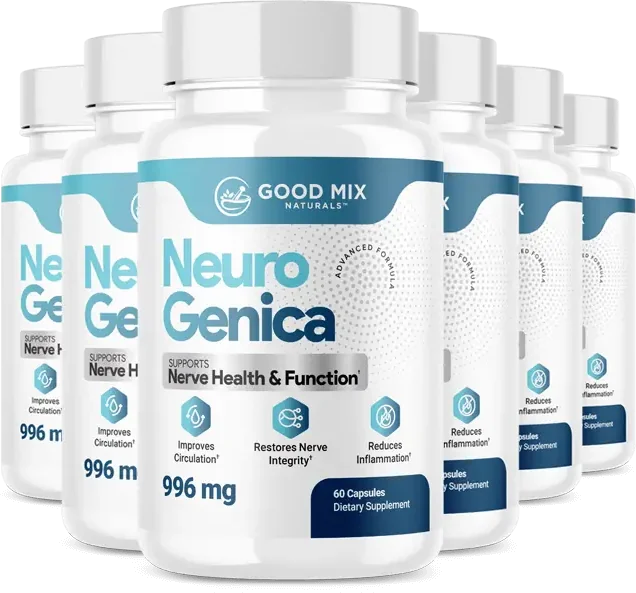
NeuroGenica Ingredients
NeuroGenica contains 8 declared ingredients, several chosen in specifically active or well-absorbed forms rather than cheaper generic alternatives.
Exact per-capsule milligram amounts are not published on the pages we reviewed, which is worth knowing before you buy.
Eight ingredients, chosen for specific forms
What distinguishes this ingredient list from many competitors is not length but form. Several ingredients here are specifically the more bioavailable or research-relevant version of a common nutrient — R-ALA rather than generic ALA, Methylcobalamin rather than cyanocobalamin, Benfotiamine rather than standard thiamine.
What is not published on the pages we reviewed is the exact milligram amount of each ingredient per capsule. That is common across this category, and it is the honest context for setting expectations before you buy.
All 8 ingredients, one by one
R-Alpha Lipoic Acid (R-ALA) — Antioxidant
The biologically active R-form of alpha lipoic acid, distinct from the cheaper racemic ALA mixture (a 50/50 blend of R and S forms) used in some competing formulas. Research on ALA and nerve function generally uses the R-form specifically. See our full comparison.
Benfotiamine — Active B1 form
A fat-soluble form of vitamin B1 (thiamine), chosen for better absorption than standard water-soluble thiamine. Studied particularly in the context of blood-sugar-related nerve nutrition.
Methylcobalamin (B12) — Active B12 form
The active, coenzyme form of vitamin B12 that the body can use directly, unlike cyanocobalamin, which requires conversion first. Involved in normal nerve signalling and red blood cell formation.
Acetyl-L-Carnitine — Amino acid derivative
Supports cellular energy production, including within nerve cells specifically, and is studied for its association with everyday nerve comfort.
Turmeric Extract — Botanical
Supplies curcumin, a compound studied for antioxidant activity and association with the body's normal inflammatory response.
Vitamin D3 — Essential vitamin
Has a documented role in nerve and muscle function. Vitamin D deficiency is common in adults with limited sun exposure, making this a sensible general inclusion.
Magnesium Glycinate — Well-absorbed mineral form
A gently absorbed magnesium form, involved in normal nerve and muscle relaxation and associated with sleep quality.
Folic Acid — B-vitamin
Involved in red blood cell production, supporting the oxygen delivery that nerve tissue depends on.
What to discuss with your doctor first
R-ALA and Benfotiamine can both affect blood sugar levels, which matters specifically if you take diabetes medication or insulin — the combined effect is worth a conversation before you start. Turmeric can interact with blood-thinning medication at higher intakes.
See how the formula works next.